SEO blog for Eview Global | Industrial energy efficiency, rooftop solar and natural daylighting | 2026-2027
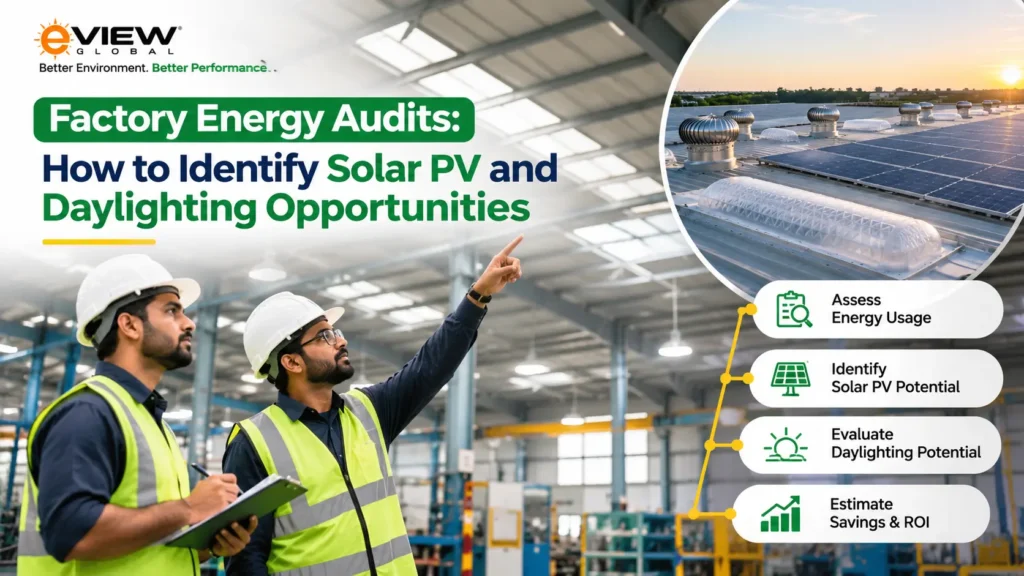
Factory Energy Audits: How to Identify Solar PV and Daylighting Opportunities
Rising electricity costs, increasing sustainability expectations and the need for operational efficiency are changing how industrial facilities approach energy management. For factories and warehouses, reducing energy consumption is no longer just about replacing outdated equipment. It requires understanding where electricity is consumed, identifying avoidable demand and investing in solutions that deliver measurable long-term value.
This is where a factory energy audit becomes essential.
A well-planned industrial energy audit can identify opportunities to improve electricity efficiency, assess rooftop solar PV potential and determine how natural daylighting systems could reduce dependence on artificial lighting during operating hours.
For industrial facilities with large roof areas, evaluating solar power and natural daylighting together can create a more coordinated energy strategy than assessing each solution independently.
What Is a Factory Energy Audit?
A factory energy audit is a systematic assessment of how an industrial facility consumes electricity and other forms of energy. It examines energy usage patterns, equipment performance, operating schedules and building conditions to identify opportunities for improvement.
An industrial energy audit typically evaluates:
- Electricity bills, tariffs and monthly consumption trends.
- Production machinery, motors, compressors and HVAC systems.
- Industrial lighting systems and operating hours.
- Peak electricity demand and load profiles.
- Roof area, orientation, shading and structural suitability.
- Potential for industrial rooftop solar PV installation.
- Opportunities to introduce natural daylighting in factories and warehouses.
The objective is not simply to reduce electricity consumption. It is to identify improvements that are technically feasible, financially justified and compatible with industrial operations.
Why Factory Energy Audits Matter in 2026-2027
Industrial energy management is increasingly influenced by three priorities: controlling operational costs, improving energy efficiency and demonstrating environmental responsibility.
For factories operating throughout the day, electricity consumption may remain substantial even when sunlight is available outside. Artificial lighting, ventilation, cooling and manufacturing equipment can contribute to daytime demand.
A factory energy audit helps distinguish between electricity that is essential for production and consumption that could potentially be reduced through improved building design, controls or renewable energy.
This distinction is particularly important when planning a solar PV system. A solar installation should be designed around the facility’s realistic electricity demand, rather than relying solely on roof availability or annual electricity bills.
1. Analyse Factory Electricity Consumption and Peak Demand
The first step is to establish an accurate energy baseline.
An industrial energy audit should review at least 12 months of electricity bills where available, together with interval-meter data, production schedules and seasonal operating patterns.
Key measurements include:
- Total monthly electricity consumption in kWh.
- Maximum demand in kW or kVA.
- Daytime and nighttime electricity usage.
- Electricity tariff structure and applicable demand charges.
- Operating hours across shifts and production cycles.
This information helps determine when electricity is consumed and how closely the facility’s demand aligns with potential rooftop solar generation.
For example, a factory operating primarily during daylight hours may have a different solar self-consumption profile from a facility running three shifts.
SEO insight: Businesses researching factory electricity bill reduction are often looking for practical solutions rather than general renewable energy information. An energy audit provides the technical foundation for those decisions.
2. Identify Natural Daylighting Opportunities in Industrial Buildings
Many factories and warehouses use artificial lighting throughout the working day, even when substantial daylight is available outside.
A daylighting assessment examines whether natural sunlight can be introduced through properly designed roof-mounted daylighting systems without compromising the building’s operational requirements.
The assessment should consider:
- Existing artificial lighting levels and energy consumption.
- Roof geometry and suitable daylighting locations.
- Daylight distribution across production and storage areas.
- Required illuminance for different industrial activities.
- Potential glare, heat gain and visual comfort concerns.
- Integration with LED lighting and daylight-responsive controls.
Industrial natural daylighting systems can help reduce artificial lighting usage during suitable daylight conditions. However, actual savings depend on the facility layout, local climate, lighting controls and working hours.
For Eview Global, this is especially relevant because daylighting can be evaluated alongside rooftop solar PV as part of a coordinated industrial energy project.
3. Assess Industrial Rooftop Solar PV Potential
After understanding electricity demand, the next step is evaluating the building’s suitability for an industrial rooftop solar installation. A solar PV feasibility assessment examines both technical and commercial factors.
Roof suitability and structural condition
Industrial roofs must be assessed for available installation area, structural capacity, condition, access and maintenance requirements. Metal roofing systems may need additional checks related to mounting, corrosion, waterproofing and wind loads.
Solar generation potential
Expected solar electricity generation depends on location, roof orientation, tilt, shading, system design and equipment performance.
Electricity consumption alignment
A rooftop solar PV system should be evaluated against daytime electricity consumption, applicable grid-export rules and the facility’s future operational requirements.
Financial feasibility
The audit should estimate capital expenditure, annual electricity savings, maintenance costs, system life and projected payback under clearly stated assumptions.
A technically feasible solar installation is not automatically the most financially efficient system size. Proper energy analysis helps determine the appropriate investment.
4. Evaluate Solar PV and Daylighting as an Integrated Solution
One of the most valuable opportunities identified during a factory energy audit is the potential to coordinate solar power generation with reductions in daytime lighting demand.
These technologies perform different functions:
- Solar PV systems generate electricity from sunlight.
- Natural daylighting systems reduce the need for artificial illumination when sufficient daylight is available.
When evaluated together, they can influence the facility’s daytime electricity balance.
For example, if a factory reduces artificial lighting demand through daylighting and automated lighting controls, its revised daytime load profile may affect the optimal size or economics of a proposed solar PV installation.
This does not mean daylighting always reduces the required solar capacity. The outcome depends on equipment loads, electricity tariffs, export arrangements, future expansion plans and the facility’s energy objectives.
An integrated assessment helps ensure that roof space, lighting performance and solar generation are considered within one engineering strategy.
5. Calculate Potential Energy Savings and Solar Investment ROI
An effective factory energy audit should translate technical opportunities into measurable financial outcomes.
For industrial rooftop solar PV, calculations may include expected annual generation, self-consumption, avoided electricity purchases and maintenance expenses.
For natural daylighting, the assessment may estimate reductions in artificial lighting operating hours, lighting electricity consumption and associated maintenance requirements.
A simplified financial approach is:
These calculations are useful for initial comparisons, but a complete investment appraisal should also consider tariff escalation, equipment replacement, financing costs, degradation, discount rates and operational changes.
For integrated projects, it is important to avoid double-counting electricity savings. The daylighting-adjusted load should be used when modelling solar self-consumption and project economics.
6. Prioritise Energy Improvements Before Finalising Solar Capacity
A common mistake in industrial energy planning is sizing a solar PV installation before identifying opportunities to improve energy efficiency.
A more effective approach is to assess the facility’s existing demand, identify feasible efficiency measures and then model the resulting electricity profile.
This may include LED lighting upgrades, daylight-responsive controls, natural daylighting, motor efficiency improvements and other operational measures.
Some improvements may be implemented before solar installation, while others can be planned as part of the same project.
The key is to ensure that investment decisions reflect realistic future energy consumption rather than outdated operating conditions.
7. Develop an Industrial Energy Improvement Roadmap
The final output of a factory energy audit should be an actionable improvement plan.
A practical roadmap may contain:
- Immediate actions: Correct operating schedules, reduce unnecessary lighting and address avoidable energy waste.
- Short-term improvements: Evaluate lighting controls, equipment optimisation and targeted efficiency upgrades.
- Capital projects: Assess industrial rooftop solar PV, natural daylighting and integrated roof design.
- Performance monitoring: Establish energy KPIs and compare actual savings with project estimates.
This phased approach helps industrial businesses prioritise projects based on technical feasibility, financial return and operational impact.
How Eview Global Supports Industrial Solar PV and Natural Daylighting
Eview Global directly supplies and installs solar PV systems and industrial natural daylighting solutions, helping industrial customers explore coordinated approaches to rooftop energy generation and daytime lighting efficiency.
By considering solar panel placement and daylighting requirements together during project planning, industrial facilities can make more informed decisions about roof utilisation, electricity consumption and long-term investment.
Whether a business is developing a new manufacturing facility or upgrading an existing industrial roof, early evaluation of both technologies can help identify practical opportunities for improvement.
Frequently Asked Questions
What is the purpose of a factory energy audit?
A factory energy audit identifies how energy is consumed and recommends technically and financially viable ways to reduce waste, improve efficiency and evaluate renewable energy investments.
Can a factory energy audit identify rooftop solar opportunities?
Yes. An audit can establish the facility’s electricity demand profile and support a rooftop solar feasibility assessment. Structural, electrical and site-specific engineering checks are also required.
How does natural daylighting reduce factory electricity consumption?
Natural daylighting introduces sunlight into industrial interiors, potentially reducing artificial lighting use during daylight hours. Savings depend on the building design, daylight availability and lighting-control strategy.
Should natural daylighting be planned before solar PV installation?
Both should ideally be evaluated during the same planning stage. Daylighting can change daytime lighting demand, while solar PV design must account for available roof space and the facility’s expected electricity consumption.
Conclusion: Make Factory Energy Audits the Starting Point for Smarter Investments
A factory energy audit is more than an exercise in identifying electricity wastage. It is a planning tool that helps industrial businesses understand energy demand, evaluate rooftop solar PV opportunities and assess the benefits of natural daylighting.
By considering energy efficiency and renewable energy together, factories can make better-informed investment decisions and develop a more practical long-term energy strategy.
Planning an industrial solar PV or natural daylighting project? Explore Eview Global’s solar power and daylighting solutions to understand how an integrated approach could support your facility’s energy objectives.