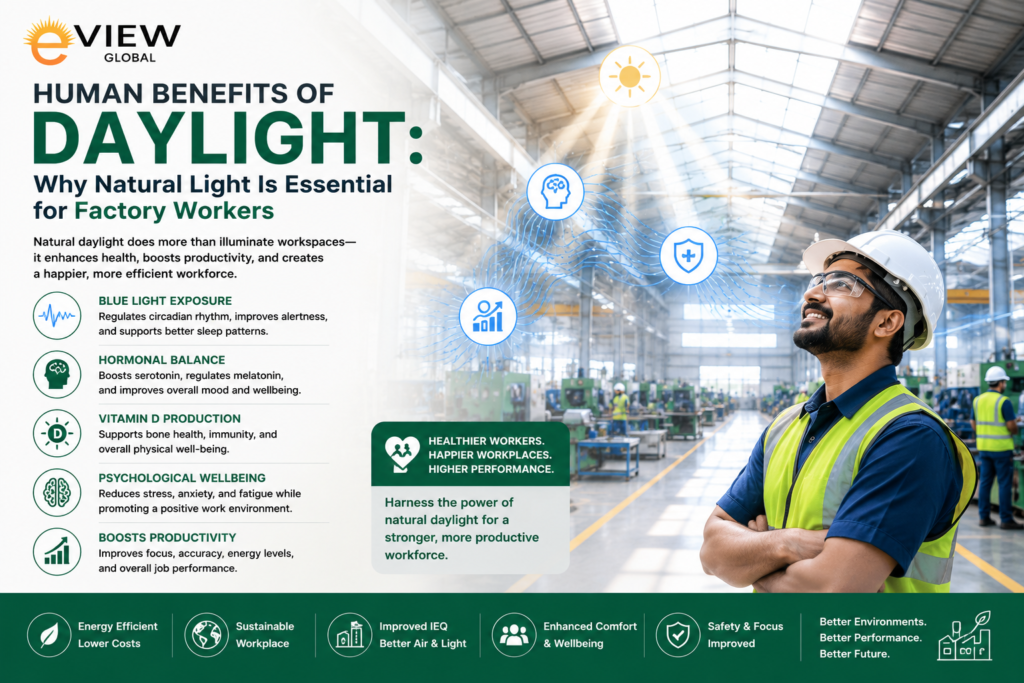
For decades, industrial buildings have been designed primarily around production efficiency, machinery placement, and operational requirements. However, one critical factor that directly impacts worker wellbeing, productivity, and workplace performance is often overlooked—natural daylight.
Many factories continue to rely heavily on artificial lighting throughout the day, even when abundant sunlight is available outside. While artificial lighting provides visibility, it cannot fully replicate the biological and psychological benefits of natural daylight. Workers who spend long hours in poorly lit environments may experience fatigue, reduced alertness, lower productivity, and decreased overall wellbeing.
Today, leading organizations are recognizing that natural daylight is not merely a lighting source—it is a critical component of a healthy workplace. Through effective Industrial Daylighting Systems and Indoor Environment Quality Management (IEQM) strategies, factories can create brighter, healthier, and more productive working environments.
Why Natural Daylight Matters in Industrial Buildings
Natural daylight is an essential part of human health and performance. Throughout human history, our bodies have evolved to respond to sunlight. Exposure to daylight influences biological processes that regulate sleep patterns, hormone production, mood, energy levels, and cognitive performance.
When workers spend most of their day inside factories without access to sufficient daylight, these natural biological processes can become disrupted. This is particularly important in manufacturing facilities, warehouses, logistics centers, processing plants, and industrial buildings where employees often spend eight to twelve hours indoors each day. Providing access to natural daylight helps create a healthier indoor environment while supporting worker comfort and operational efficiency.
The Relationship Between Daylight and Human Biology
Natural sunlight contains a broad spectrum of light wavelengths that influence the human body in ways artificial lighting cannot fully replicate. One of the most important components is blue light, which plays a key role in regulating the body’s circadian rhythm—our natural internal clock.
The circadian rhythm controls:
- Sleep-wake cycles
- Hormone production
- Energy levels
- Mental alertness
- Cognitive performance
- Overall wellbeing
When workers receive adequate daylight exposure during working hours, the body receives signals that help maintain healthy biological rhythms. This contributes to improved alertness, better focus, and higher energy levels throughout the day.
Daylight and Hormonal Balance
Natural daylight directly influences hormone production within the human body.
Serotonin Production
Exposure to natural light stimulates the production of serotonin, often referred to as the “feel-good hormone.” Serotonin is associated with:
- Improved mood
- Increased focus
- Better emotional wellbeing
- Reduced stress levels
- Higher workplace satisfaction
Workers exposed to sufficient daylight often report feeling more positive, motivated, and engaged throughout the workday.
Melatonin Regulation
Natural daylight also helps regulate melatonin production. Melatonin is the hormone responsible for controlling sleep cycles. Proper exposure to daylight during the day helps ensure that melatonin is released appropriately during the evening, supporting better sleep quality. Employees who maintain healthy sleep patterns often experience:
- Improved concentration
- Higher productivity
- Better decision-making
- Reduced fatigue
- Increased workplace safety
The Role of Daylight in Vitamin D Production
Vitamin D is an essential nutrient that supports numerous bodily functions. Although workers may not receive direct sunlight continuously inside industrial buildings, increased exposure to natural daylight helps encourage healthier interactions with natural light throughout the day. Vitamin D contributes to:
- Bone health
- Immune system function
- Muscle strength
- General wellbeing
A workforce with better overall health often translates into reduced absenteeism and improved workplace performance.
Psychological Benefits of Natural Light
The impact of daylight extends far beyond physical health. Studies consistently demonstrate that access to natural light positively influences mental wellbeing and workplace satisfaction.
- Reduced Stress Levels: Dark, enclosed environments often contribute to feelings of fatigue and mental strain. Natural daylight helps create brighter and more comfortable workplaces, reducing stress and promoting a more positive work environment.
- Improved Mood: Workers exposed to natural daylight frequently report higher levels of happiness and job satisfaction compared to those working exclusively under artificial lighting.
- Enhanced Workplace Experience: A brighter environment often feels more open, inviting, and comfortable, contributing to a better overall employee experience.
How Natural Daylight Improves Productivity
Productivity is one of the most important performance indicators in any industrial operation. Natural daylight contributes to productivity in several ways.
Workers operating in well-lit environments often experience improved focus and reduced mental fatigue.
Exposure to natural daylight helps maintain healthy circadian rhythms, leading to greater alertness throughout the workday.
Improved visibility and worker concentration can help reduce operational mistakes and improve overall performance.
Comfortable working conditions contribute to greater employee motivation and engagement.
Collectively, these benefits can have a significant impact on operational efficiency and workforce performance.
Daylight and Workplace Safety
Safety remains a top priority for industrial facilities. Poor lighting conditions can increase the likelihood of accidents, errors, and safety incidents. Natural daylight improves visibility across workspaces, helping employees identify hazards, operate equipment more effectively, and maintain greater situational awareness.
Enhanced visibility contributes to:
- Safer work environments
- Improved operational control
- Reduced accident risks
- Better overall workplace performance
Energy Savings Through Industrial Daylighting
Beyond worker wellbeing, natural daylight offers significant operational advantages. Factories that depend heavily on artificial lighting consume large amounts of electricity throughout the day. Industrial Daylighting Systems help reduce this dependence by utilizing available sunlight to illuminate indoor spaces. Benefits include:
- Reduced electricity consumption
- Lower energy costs
- Improved sustainability performance
- Reduced carbon footprint
- Better building efficiency
This makes daylighting an environmentally responsible and economically beneficial solution.
The Role of Industrial Daylighting Systems
Modern Industrial Daylighting Systems are specifically designed to maximize natural light penetration while minimizing heat gain and maintenance requirements. Common daylighting solutions include:
Brilantor
Brilantor systems help distribute natural daylight deep into industrial spaces, reducing the need for artificial lighting while improving workplace visibility.
LightBall
LightBall systems capture and diffuse natural daylight, creating brighter and healthier indoor environments.
SkyPipe
SkyPipe daylighting solutions channel sunlight into interior areas that may otherwise receive limited natural illumination.
These systems help improve Indoor Environment Quality while supporting worker comfort and productivity.
Daylight as a Core Component of IEQM
Indoor Environment Quality Management (IEQM) focuses on creating healthier indoor environments by improving key environmental factors such as:
- Daylighting
- Ventilation
- Air circulation
- Thermal comfort
- Indoor air quality
Natural daylight serves as one of the most important pillars of IEQM because of its direct influence on human health, wellbeing, and workplace performance. Organizations that prioritize IEQM often experience improvements in both workforce satisfaction and operational efficiency.
How eView Global Helps Create Healthier Workplaces
eView Global specializes in Indoor Environment Quality Management solutions that improve natural daylighting, air circulation, thermal comfort, and workplace performance. Through innovative solutions such as Brilantor, LightBall, SkyPipe, Turbo Ventilators, and DAE Panels, industrial facilities can create brighter, healthier, and more productive environments for their workforce. These solutions help organizations improve worker wellbeing while supporting sustainability and energy-efficiency goals.