EVIEW GLOBAL | INDUSTRIAL SOLAR PV + DAYLIGHTING
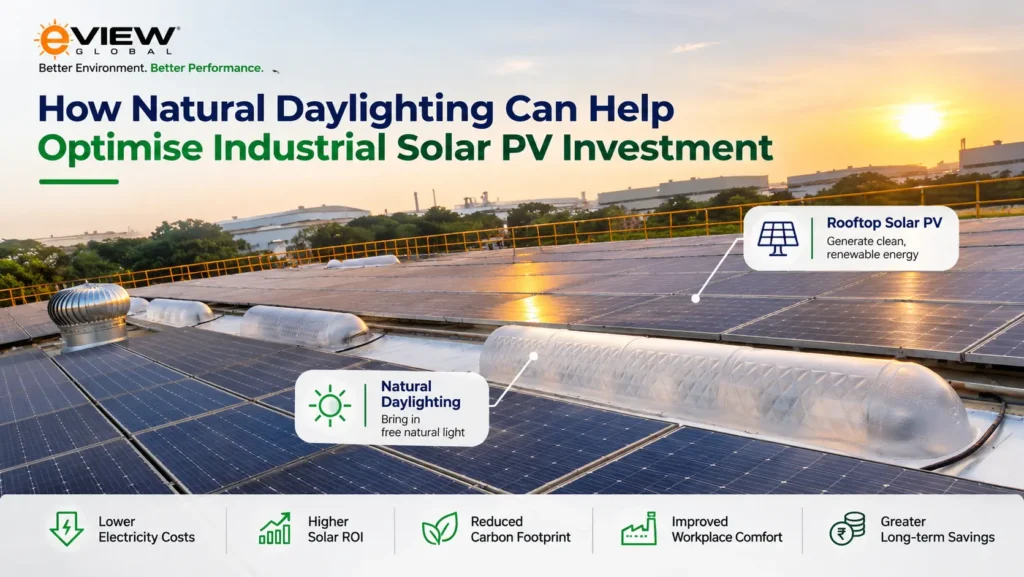
Industrial solar power is increasingly part of long-term energy planning for factories, warehouses and commercial facilities. But before deciding how many solar panels to install, businesses should ask a more fundamental question: how much electricity does the building actually need during daylight hours? Natural daylighting for industrial solar PV projects offers an important answer. By reducing dependence on artificial lighting when sunlight is available, daylighting can help businesses plan solar capacity around a more efficient electricity demand profile.
Why Daytime Lighting Demand Matters for Solar PV Investment
An industrial rooftop solar system generates electricity during the day, when many manufacturing facilities are also operating. Lighting, machinery, ventilation, cooling and other equipment all contribute to daytime electricity consumption. If a factory uses electric lights throughout the day despite having usable natural light, its recorded electricity demand may include avoidable lighting consumption.
A solar PV system should be designed using a realistic assessment of the facility’s electricity demand, operating hours, roof conditions and applicable grid rules. Reducing unnecessary lighting consumption before finalising system size may change the capacity that best meets the business’s objectives. This does not automatically mean a smaller system is always better: export arrangements, future expansion and financial goals also matter.
How Natural Daylighting Works in Industrial Buildings
Industrial daylighting systems use carefully designed rooflights, skylights or light-transmitting units to bring sunlight into working areas. Unlike solar photovoltaic panels, which convert sunlight into electricity, daylighting systems use available sunlight directly for illumination. They are complementary technologies rather than substitutes.
In warehouses and manufacturing facilities, properly positioned daylighting units can illuminate aisles, storage areas, production floors and circulation spaces. Their effectiveness depends on roof geometry, building height, internal layout, daylight availability, glare control and the required lighting levels for each task. Artificial lighting is still needed during cloudy periods, early or late shifts and at night.
Four Ways Daylighting Can Optimise an Industrial Solar Project
1. Reduce avoidable daytime electricity consumption
When suitable daylight reaches occupied work areas, electric lighting can be dimmed or switched off using appropriate controls. This can lower daytime lighting demand and improve the building’s overall energy efficiency. The actual savings depend on lighting wattage, daylight hours, controls and site conditions.
2. Improve solar PV sizing decisions
Solar design begins with an understanding of energy use. If daylighting is expected to reduce daytime lighting loads, that reduction can be reflected in a revised load profile. Engineers can then evaluate different rooftop solar capacities against projected consumption, solar generation, tariff structures and investment priorities.
3. Make better use of available roof space
Industrial roofs must accommodate more than solar panels. Rooflights, walkways, drainage paths, ventilation equipment, fire access and maintenance clearances all require consideration. Planning solar PV and daylighting together helps avoid clashes between components and can improve the overall roof layout.
4. Evaluate lifecycle value, not only installation cost
A combined project should consider capital expenditure, projected energy savings, cleaning and maintenance, component lifetimes, lighting-control performance and operational disruption. This whole-building approach can produce a more useful investment comparison than evaluating solar panels and skylights in isolation.
A Practical Example: Why the Load Profile Comes First
Consider a factory planning a rooftop solar installation. Its energy audit identifies a substantial daytime lighting load in areas that could receive useful natural daylight. The project team models an improved lighting arrangement using daylighting units and appropriate switching or dimming controls. It then recalculates the expected electricity profile and compares several solar PV sizes.
The resulting recommendation may involve a different solar capacity, a different roof layout or the same PV capacity with more electricity available for other uses. The correct answer depends on measured consumption, engineering calculations and the project’s commercial assumptions. A credible proposal should show these assumptions clearly rather than promise a fixed percentage reduction.
Key Design Considerations Before Combining Solar Panels and Daylighting
Integrated planning requires technical coordination. Teams should assess structural loading, roof waterproofing, wind exposure, panel shading, skylight transmission, glare, internal illumination standards and safe maintenance access. They should also consider whether daylighting units affect PV row spacing or usable installation area. Electrical design, fire safety and relevant local regulations remain essential.
For existing facilities, a site survey and electricity-bill analysis provide a useful starting point. Where possible, interval meter data, lighting inventories and measured indoor light levels can make the business case more reliable. For new factories, both systems can be considered earlier in the building design process.
Why an Integrated Project Approach Matters
When solar PV and natural daylighting are planned by separate teams without coordination, decisions about roof area, energy loads and access routes may be made independently. An integrated approach brings these considerations into one design process. It supports clearer responsibility for coordination and allows the building’s demand-reduction opportunities to be evaluated alongside renewable electricity generation.
Eview Global directly supplies and installs industrial solar PV systems and natural daylighting solutions. Its combined approach helps factories and commercial facilities assess rooftop solar generation and natural illumination as parts of a coordinated project, rather than treating them as unrelated additions.
How to Assess the Potential Return on Investment
To assess industrial solar PV investment, start with current electricity bills and a representative daytime load profile. Estimate the potential lighting-energy reduction from daylighting using site-specific conditions. Next, model PV generation for feasible roof layouts and compare capital costs, annual savings, operating expenses and payback periods. Sensitivity checks for tariff changes, production shifts and equipment performance can make the results more robust.
Importantly, a solar PV system may still be sized to serve machinery or other loads even after lighting demand falls. Daylighting can improve energy efficiency without necessarily reducing installed PV capacity. The aim is to optimise total project value, not simply minimise the number of panels.
Frequently Asked Questions
Can natural daylighting reduce the size of an industrial solar PV system?
Potentially. If daylighting lowers daytime electricity demand, it can affect the economically appropriate PV size. However, the outcome depends on other loads, export rules, future demand and project objectives.
Can solar panels and industrial skylights be installed on the same roof?
Yes, where roof structure, layout, waterproofing, access and shading are properly assessed. Both systems should be coordinated during design.
Does daylighting eliminate the need for LED lighting?
No. Artificial lighting remains important when daylight is insufficient and for tasks requiring consistent illumination. Daylight-responsive controls can help the systems work together.
Is integrated solar PV and daylighting suitable for existing factories?
Many existing facilities can be evaluated for retrofits, subject to roof condition, structural capacity, operational requirements and feasibility findings.
Plan a Smarter Industrial Energy Investment with Eview Global
Industrial solar power delivers the greatest practical value when it is designed around the building it serves. By assessing natural daylighting alongside rooftop solar PV, businesses can reduce avoidable daytime lighting demand, coordinate roof space and make better-informed investment decisions. Eview Global can help evaluate an integrated solar power and daylighting solution for factories, warehouses and commercial buildings.
Explore Eview Global’s Industrial Solar Power & Natural Daylighting Solutions or contact the team to discuss a project assessment.