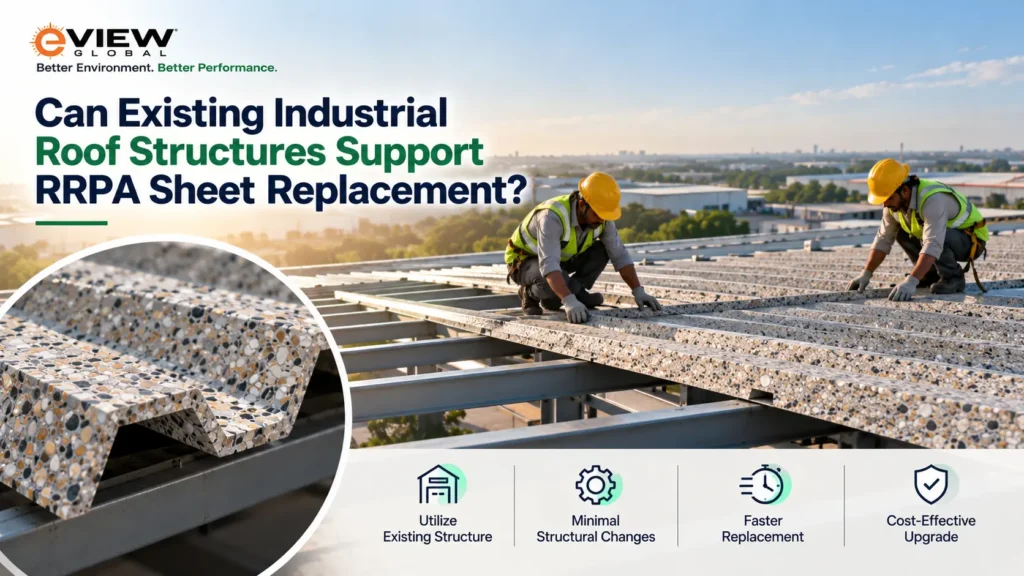
Can Existing Industrial Roof Structures Support RRPA Sheet Replacement?
Replacing an old industrial roof does not always mean rebuilding the entire structure. For many factory owners, warehouse operators, and industrial facility managers, upgrading the existing roofing system can be a practical way to improve roof performance while avoiding unnecessary construction work. However, before replacing conventional roofing sheets with RRPA sheets, one important question must be answered: can the existing industrial roof structure safely support the new roofing system?
The answer depends on several factors, including the condition of the roof trusses, purlins, supporting connections, existing roofing material, wind loads, and the specifications of the proposed RRPA sheets. Although lightweight roofing materials can help reduce the load imposed on a building, the existing structure must still be inspected and evaluated before replacement begins.
In this guide, we explain how to assess an existing factory roof, which structural factors matter during RRPA sheet replacement, and how businesses can plan an industrial roof renovation more effectively.
What Is RRPA Roofing, and Why Consider It for Roof Replacement?
RRPA stands for Reinforced Regenerated Plastic and Aluminium. It is a composite roofing material developed for industrial and commercial construction applications. RRPA roofing sheets combine regenerated plastic with aluminium reinforcement, offering an alternative to selected conventional roofing materials.
Industrial buildings often use galvanised iron (GI) sheets, coated metal sheets, fibre cement sheets, or other roofing systems. Over time, these materials may require replacement because of corrosion, damaged fasteners, water leakage, weather exposure, or general deterioration.
When planning a roof upgrade, facility owners may consider RRPA roofing sheets for their lightweight construction, moisture resistance, corrosion resistance, and potential maintenance advantages. These characteristics can make RRPA worth evaluating for factories, warehouses, industrial sheds, and other suitable buildings.
One potential advantage of a lightweight roofing system is that it may reduce the dead load contributed by the roof covering compared with a heavier existing material. However, the actual weight difference must be calculated using the verified specifications of both the existing roof and the proposed replacement.
Explore eView Global’s RRPA roofing sheets to learn more about the material and its industrial applications.
Can an Existing Industrial Roof Support RRPA Sheet Replacement?
In many cases, an existing industrial roof structure may be suitable for RRPA sheet replacement, provided that its structural condition, supporting arrangement, and load capacity are adequate.
A factory roof generally consists of multiple interconnected components, including the main roof trusses or rafters, purlins, columns, bracing, connections, fasteners, and roofing sheets. Each component has a role in transferring loads safely through the structure.
Replacing the roofing material changes one part of this system, but it does not automatically resolve weaknesses in the other components.
For example, an industrial shed may have sound roof trusses but corroded purlins. Another building may have relatively new roofing supports but loose connections or unauthorised structural modifications. In both cases, selecting a lightweight replacement sheet alone would not establish that the roof is safe.
The correct approach is to evaluate the existing roof, verify the proposed RRPA sheet specifications, and confirm that the complete roofing assembly is suitable for the building’s design conditions.
The key principle is simple: a lightweight roofing sheet can help reduce roof dead load, but it cannot compensate for a structurally damaged or inadequately designed roof.
1. Assess the Existing Roof Trusses and Supporting Structure
Roof trusses and rafters transfer the loads from the roof covering to the main building frame. Before replacing industrial roofing sheets, these structural members should be inspected for signs of deterioration or damage.
For steel industrial sheds, the assessment may include checking for corrosion, section loss, bent members, buckling, damaged welds, loose bolts, and modifications made after the original construction.
For buildings with reinforced concrete components, the inspection may also need to consider cracking, concrete deterioration, exposed reinforcement, and other signs of structural distress.
The inspection should establish whether the existing roof frame remains suitable for its intended use. Where drawings are unavailable or the building has been modified, an engineer may need to verify the actual dimensions and condition of the structure.
This step is especially important for older factories and warehouses where roofing replacements, equipment installations, or extensions may have taken place over several years.
2. Check the Condition and Spacing of Roof Purlins
Purlins are the secondary structural members that support the roofing sheets and transfer their loads to the main roof frame. Their condition and spacing are important considerations when replacing an industrial roof.
Before installing RRPA sheets, check:
- Purlin condition: Look for rust, corrosion, deformation, cracks, or other signs of deterioration.
- Purlin spacing: Confirm that the existing spacing is compatible with the proposed RRPA sheet profile and its approved support requirements.
- Support alignment: Check whether the purlins provide suitable support at sheet edges, overlaps, and fastening locations.
- Connections: Inspect the connections between purlins and the main structural members.
- Existing deflection: Investigate any visible sagging or unusual deformation.
The purlin spacing used for the previous roofing material should not automatically be assumed suitable for RRPA sheets. Different roofing materials have different span capabilities, fastening requirements, and performance characteristics.
The recommended support spacing must therefore be confirmed using the applicable RRPA product specifications, installation guidance, and project-specific engineering requirements.
3. Compare the Existing Roof Weight with the Proposed RRPA System
One of the main reasons industrial building owners consider lightweight roofing sheets is the potential reduction in dead load.
Dead load refers to the permanent weight of the building components, including the roof covering and other permanently installed elements. If the existing roofing material is heavier than the proposed RRPA system, replacing it may reduce the permanent load carried by the supporting structure.
However, the comparison must be based on the complete roofing assembly rather than the sheet material alone. The assessment should consider:
- The weight of the existing roofing sheets.
- The specified weight of the proposed RRPA sheets.
- Overlaps, fasteners, accessories, and other installation components.
- Any insulation, lining, suspended services, or additional roof layers.
- Existing solar panels, walkways, platforms, or other permanent installations.
- Any proposed changes to the supporting structure.
A lighter roof covering may provide a useful structural advantage, but the engineer must still evaluate all relevant loads and load combinations. A reduction in dead load does not automatically establish that the existing roof can withstand wind uplift or other design actions.
4. Evaluate Wind Load and Roof Fastening Requirements
Wind performance is a critical consideration in industrial roofing, particularly for large factories, warehouses, and buildings located in areas exposed to strong winds.
Wind can create pressure on the roof and suction that attempts to lift the roofing sheets away from the supporting structure. The roof covering, fasteners, purlins, connections, and main frame must work together to resist these forces.
During RRPA sheet replacement, the proposed fixing arrangement should be evaluated for the building’s location, roof geometry, exposure conditions, and applicable design requirements. Important considerations include:
- The approved RRPA sheet fastening method.
- The number, position, and type of fasteners.
- The compatibility of fasteners with the supporting material.
- Sheet overlaps and edge details.
- Wind uplift resistance of the complete installed system.
- The condition of the existing purlins and their connections to the roof frame.
A replacement roofing system should not simply reuse the old fastener pattern without checking compatibility. The existing arrangement may have been designed for a different sheet profile or may have deteriorated over time.
For large industrial roofs, a qualified structural engineer should verify the relevant wind loads and confirm that the proposed installation provides an adequate load path from the roofing sheets to the main structure.
5. Inspect Corrosion, Water Leakage, and Existing Roof Damage
Industrial roofs are exposed to rain, humidity, heat, airborne contaminants, and, in some facilities, chemicals or process-related moisture. Over time, these conditions may damage the roof covering and supporting components.
Common warning signs include:
- Rusted or perforated metal sheets.
- Repeated leakage around fasteners and sheet overlaps.
- Corroded purlins or structural connections.
- Damaged roof edges and flashing.
- Water accumulation caused by poor drainage.
- Visible sagging or deformation.
- Deteriorated sealants and roof accessories.
Replacing the roofing sheets may address problems originating in the old covering, but it will not necessarily resolve damaged structural members, drainage defects, or inadequate roof detailing.
Before installation, identify the source of existing leaks and inspect the underlying supports. Any structural deterioration should be addressed through an appropriate repair or strengthening plan before the new roofing system is installed.
6. Verify RRPA Sheet Specifications and Installation Requirements
Not every roofing sheet is suitable for every roof configuration. Before confirming an RRPA replacement project, obtain the technical specifications for the exact product being considered.
The information should cover sheet dimensions, thickness, weight, profile, permissible support spacing, fastening requirements, and relevant performance data. The following questions should be answered before installation:
- What is the specified weight per sheet or square metre?
- What is the approved maximum support spacing?
- Which fasteners and accessories are recommended?
- What overlap and edge details are required?
- What wind performance data are available for the proposed assembly?
- What fire-performance documentation is available for the exact product?
- Are there limitations concerning temperature, chemicals, or the intended industrial environment?
- What warranty and maintenance requirements apply?
These details should be confirmed with the manufacturer or supplier rather than estimated from the appearance of the material.
Fire performance deserves particular attention. A product described as fire-retardant should not automatically be treated as non-combustible or assigned a particular fire rating. Confirm the relevant test documentation and ensure that the selected roofing system meets the applicable building, occupancy, and industrial safety requirements.
7. Determine Whether the Existing Structure Needs Strengthening
An assessment may find that the existing roof is suitable for direct replacement. In other cases, certain components may need repair or strengthening before the new sheets can be installed.
Potential measures depend on the actual structural findings and may include repairing corroded members, replacing damaged purlins, strengthening connections, correcting drainage issues, or revising the roofing support arrangement.
The decision should be based on engineering calculations and the condition of the building-not on a general assumption that RRPA sheets are lightweight.
A useful distinction is that roof sheet replacement and structural rehabilitation are two different activities. The replacement material may be suitable even when parts of the existing support structure require attention first.
If the assessment identifies significant deterioration, excessive deflection, unstable connections, or other signs of structural distress, the affected area should be evaluated by a qualified professional before roofing work proceeds.
8. Plan the Replacement Without Unnecessary Production Disruption
For operational factories and warehouses, roof replacement is not just a construction decision. It can also affect production schedules, stored materials, equipment protection, and worker safety.
A planned RRPA roof replacement project should therefore include an installation sequence and a site-specific safety plan. Consider the following measures:
- Survey the roof: Document the existing roofing material, dimensions, condition, support spacing, and visible defects.
- Review available drawings: Compare the original structural information with the actual building configuration.
- Complete the structural assessment: Verify load capacity, connections, wind resistance, and any necessary repairs.
- Confirm material quantities: Calculate the sheet requirement, overlaps, accessories, and installation details.
- Plan work zones: Protect machinery, stored inventory, electrical equipment, and active production areas.
- Schedule removal and installation: Coordinate the work to minimise the period during which the building is exposed to rain.
- Inspect the completed roof: Check fastening, overlaps, flashing, drainage, and compliance with the approved installation method.
Roof work must be carried out using suitable fall-protection measures, access equipment, and safe working procedures. Existing sheets should not be assumed safe to walk on, even if they appear undamaged. Any temporary loading from workers, tools, or materials must also be considered.
RRPA Sheet Replacement: A Practical Assessment Checklist
Before approving an industrial roof replacement project, use this checklist to identify the information that should be available.
| Assessment area | What needs to be verified |
|---|---|
| Roof trusses and rafters | Structural condition, member sizes, and load capacity |
| Purlins | Condition, spacing, alignment, and support suitability |
| Existing roof covering | Weight, damage, leakage, and removal requirements |
| Proposed RRPA sheets | Product specifications, weight, profile, and approved applications |
| Fastening system | Fastener type, spacing, overlaps, and connection details |
| Wind resistance | Applicable wind loads and resistance of the complete roof assembly |
| Drainage | Roof slope, water flow, gutters, and potential ponding |
| Additional loads | Solar panels, walkways, services, suspended equipment, and other additions |
| Safety and compliance | Structural assessment, working-at-height controls, and applicable regulations |
| Project execution | Material availability, installation sequence, and operational disruption |
This checklist is a planning aid, not a substitute for a structural design review or professional certification where required.
What Are the Benefits of Assessing the Roof Before Replacement?
A proper assessment can help businesses make more informed decisions about their roofing investment.
- Better cost planning: Identifying repairs and support modifications early helps reduce the likelihood of unexpected expenses during installation.
- Improved structural safety: Evaluating the existing frame, purlins, connections, and proposed fastening arrangement helps identify issues before work begins.
- More appropriate material selection: Comparing the actual roof requirements with RRPA product specifications helps determine whether the proposed sheets suit the building.
- Reduced disruption: Planning removal, installation, weather protection, and work zones can help limit avoidable interruptions to factory or warehouse operations.
- More effective long-term maintenance: Addressing drainage, corrosion, and damaged supports during the project can reduce the risk of simply transferring old problems to a new roof covering.
The overall value of an RRPA roof replacement project depends on the suitability of the product, the condition of the building, the installation quality, and the maintenance requirements over time.
Frequently Asked Questions
Can RRPA sheets be installed on an existing Gl roof structure?
Potentially, yes. The existing structure must be inspected, and the RRPA sheet profile, support spacing, fastening method, and design loads must be verified. The suitability of the old Gl roof structure cannot be confirmed from the roofing material alone.
Do lightweight RRPA roofing sheets reduce structural load?
They may reduce the dead load if their verified installed weight is lower than that of the existing roofing assembly. The actual reduction depends on the products being compared and the additional components included in the replacement system.
Is it necessary to replace old purlins when installing RRPA sheets?
Not always. Existing purlins may be retained if their condition, capacity, spacing, connections, and compatibility with the new roofing system are adequate. Damaged or unsuitable purlins may require repair, strengthening, or replacement.
Can RRPA sheets be installed without changing the existing roof design?
Some projects may allow the existing support arrangement to be retained, but this should be confirmed through an assessment of the exact building and roofing product. Sheet overlaps, support spacing, drainage, and wind-resistant fastening may require adjustments.
Should an engineer inspect the roof before RRPA sheet replacement?
A structural assessment by a qualified professional is strongly recommended, particularly for older industrial buildings, roofs with visible damage, structures with undocumented modifications, and projects involving uncertain load capacity. The engineer can determine the extent of investigation and any repairs required.
Conclusion: Assess First, Replace with Confidence
Existing industrial roof structures can be candidates for RRPA sheet replacement, but suitability depends on the condition and capacity of the entire roofing system. Roof trusses, purlins, structural connections, wind resistance, drainage, and the technical specifications of the replacement sheets all need to be considered.
RRPA roofing sheets may offer advantages where a lightweight, corrosion-resistant composite material is appropriate for the building’s requirements. However, the decision to retain the existing structure should be based on verified product information and an engineering assessment-not on the material’s lightweight characteristics alone.
For factory owners, warehouse operators, and industrial developers planning a roof upgrade, the best starting point is to document the existing roof, identify its defects, confirm the proposed RRPA sheet specifications, and establish whether repairs or strengthening are necessary.
Explore eView Global’s RRPA roofing solutions to learn more about RRPA sheets for industrial roofing applications and discuss product suitability for your project.