Turbo Ventilators
Turbo Ventilators & Roof Air Ventilator Solutions for Industrial Ventilation
Our turbo ventilators and roof air ventilator systems are designed to improve airflow, extract heat, and enhance ventilation efficiency in industrial buildings. These wind-driven solutions reduce dependence on powered systems while maintaining consistent air circulation and indoor comfort.
What Are Turbo Ventilators?
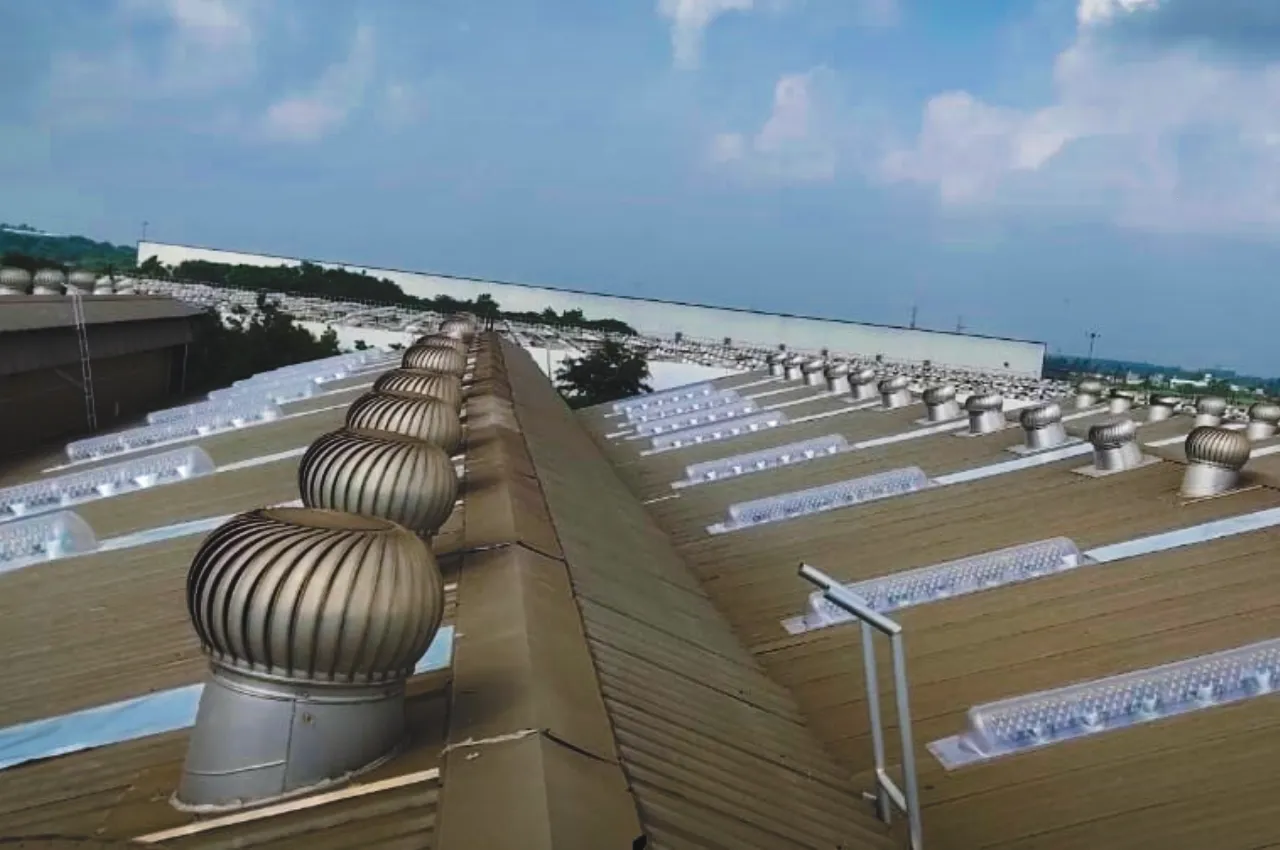
Turbo ventilators are wind-driven roof vents installed on industrial and commercial roofs to remove trapped heat, fumes, humidity, and stale air. Unlike powered exhaust fans, a turbine ventilator relies entirely on natural airflow, making it a reliable, maintenance-free solution for large buildings that require continuous roof ventilation systems.
How a Roof Air Ventilator Works
A roof air ventilator works using a rotating turbine head that spins even with minimal wind pressure. As the turbine ventilator rotates, it creates negative pressure inside the building, pulling out hot air and allowing fresh air to enter naturally. This passive air vent mechanism provides effective ventilation without relying on electricity, motors, or wiring.
Why Choose Turbo Ventilators for Roof Ventilation?
Turbo ventilators provide an efficient and reliable solution for improving air circulation in industrial buildings. As a roof air ventilator, they remove trapped heat, humidity, and stale air without relying on electricity, making them ideal for continuous ventilation.
Their wind-driven operation ensures low maintenance, energy savings, and consistent airflow, helping create a more comfortable and productive indoor environment.
How Lightball Skylight Tubes Deliver Natural Daylight
The Lightball system uses advanced optics to transport sunlight efficiently through the roof and into your building.
Active Light Capture (The “Ball”)
The unique, impact-resistant spherical dome captures low-angle sunlight in the early morning and late afternoon far better than flat tubular skylight domes, ensuring longer hours of natural light.
Efficient Transfer (The Tube)
Sunlight is channeled through a rigid, super-reflective Solar tube. The mirror-like interior surface ensures that 99% of the captured light reaches the interior, even through long tube runs or bends.
Brilliant Diffusion (The Diffuser)
A stylish ceiling diffuser spreads the light evenly throughout the room, providing soft, glare-free illumination without the heat associated with traditional skylights.
Talk to Our Experts
Key Features & Benefits of Roof vents
Zero-Energy Ventilation: Turbo ventilators operate entirely on natural wind force, making them energy-free alternatives to powered exhaust fans.
Continuous Hot Air Extraction: Roof vents remove rising heat, humidity, smoke, and pollutants, improving indoor air quality for workers.
Enhances Productivity & Comfort: Improved airflow lowers internal temperature, especially in industrial sheds and warehouses
Durable & Weather-Resistant: Made using corrosion-resistant aluminum or stainless steel, turbine ventilators perform reliably across changing weather conditions.
Maintenance-Free Performance: No motors, no wiring, and no recurring operational costs—just consistent passive air flow.
Supports Sustainability: Part of eco-friendly roof ventilation systems that reduce the need for mechanical exhaust systems.
Ideal Applications for Roof air ventilators
Warehouses & Storage Buildings
Turbo ventilators maintain air movement and reduce heat accumulation across wide-span roofs.
Manufacturing & Production Units
Roof air ventilators improve exhaust efficiency in areas with machinery heat, fumes, and industrial emissions.
Educational Institutions
Provide healthy Daylight Harvesting in classrooms and libraries to improve student focus and reduce eye strain.
Industrial Sheds
Passive air vents ensure better ventilation for tin sheds, steel structures, and high-ceiling buildings.
Commercial Buildings
Roof ventilation systems help maintain airflow in malls, workshops, supermarkets, and loading bays.
Turbo Ventilators vs. Traditional Exhaust Fans
| Feature | Turbo Ventilators | Exhaust Fans |
|---|---|---|
| Energy Consumption | Zero energy (wind-powered) | High electricity usage |
| Maintenance | Negligible | Requires regular servicing |
| Lifespan | 15–20 years | Lower due to motor wear |
| Operation | 24/7 passive air venting | Limited to power availability |
| Heat Exhaust Efficiency | High for large roof spaces | Moderate |
| Ideal For | Industrial & Warehousing | Small indoor rooms |
Technical Specification of Turbo Ventilators
| Specification | Details |
|---|---|
| Type | Wind-driven Turbo Ventilator |
| Material | Aluminum / SS |
| Operation | Passive, Wind-powered |
| Diameter | 24 inch / 28 inch / 32 inch |
| Installation Type | Roof-mounted |
| Applications | Warehouses, Factories, Industrial Sheds |
| Maintenance | Zero maintenance |
Key Design Considerations for Installation
Roof Slope & Orientation
Correct positioning ensures maximum wind capture for efficient turbine ventilator rotation.
Vent Spacing for Airflow
Multiple roof vents may be required depending on building size and heat load.
Material Selection
Aluminum or stainless steel options ensure long-term durability in industrial conditions.
Integration With Existing Roof Sheets
Turbo ventilators must be sealed properly to prevent leaks and ensure stability.